
Vision therapy: when seeing clearly doesn't mean seeing well
Many children have 100% visual acuity and yet struggle to read, concentrate or keep their attention on close-up tasks. This happens because seeing clearly doesn't always mean that the visual system is working efficiently.
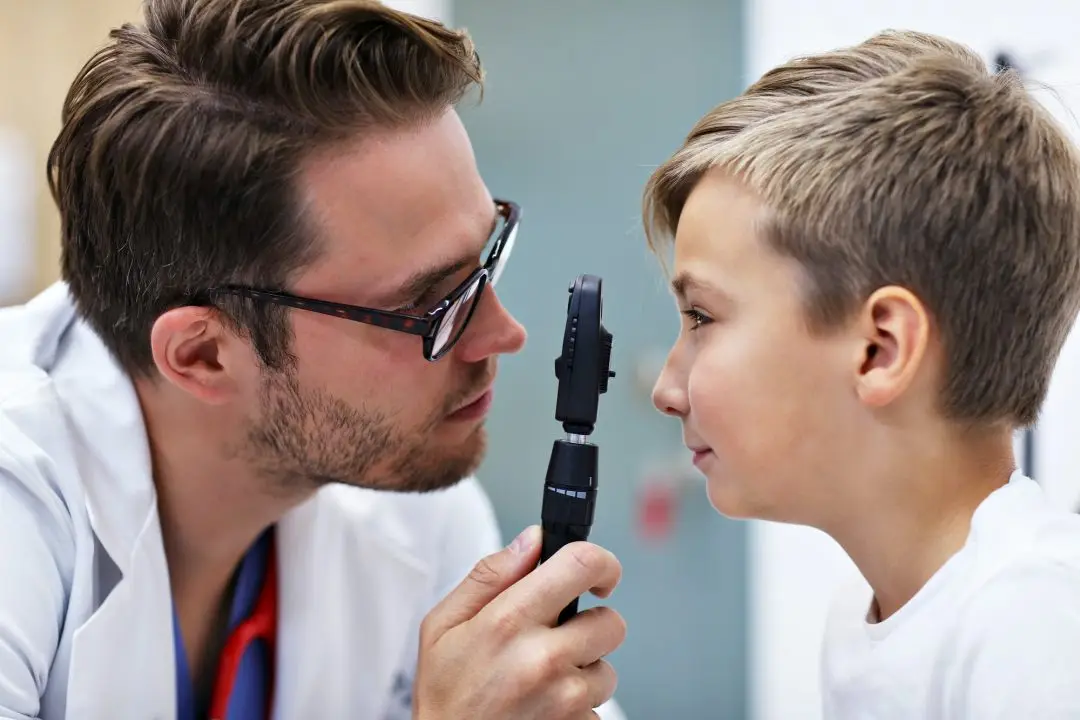
Do you recognise any of these signs in your child?
- Gets tired quickly when reading.
- Loses their place or uses a finger as a guide.
- Holds paper or screens very close.
- Avoids reading or writing tasks.
- Confuses letters or words.
- Has headaches after school.
- Finds it hard to understand what they read.
- Shows a lack of attention in close-up tasks.
These symptoms are often unrelated to any intellectual problem or lack of effort; instead, they stem from a functional visual dysfunction that makes it hard for the brain to correctly process the information received by the eyes.
What is vision therapy
Vision therapy is an optometric treatment aimed at improving the functional performance of the visual system when there are problems with eye coordination, focusing or visual information processing. It is a personalised clinical programme that trains and re-educates visual skills that are key to learning and development.
What vision therapy can treat
- Convergence insufficiency or excess.
- Binocular coordination problems.
- Accommodative disorders: difficulty focusing up close.
- Inefficient eye movements (pursuits and saccades).
- Amblyopia (lazy eye), as a complement to treatment.
- Functional strabismus.
- Eye strain associated with heavy screen use.
- Difficulties with visual perceptual skills.
These disorders can directly affect school performance, reading, writing and even a child's self-esteem.
Functional optometric assessment
Before starting any treatment, we carry out a full visual examination that goes beyond the prescription:
- Binocular assessment.
- Focusing ability (accommodation).
- Coordination of both eyes.
- Eye movements.
- Visual flexibility.
- Visual integration and processing, when indicated.
This analysis lets us identify whether a visual dysfunction is interfering with learning or visual comfort.
What the treatment involves
Vision therapy is based on an individual programme that combines in-clinic sessions, specific exercises to do at home and regular progress check-ups.
The length depends on each case, usually between 3 and 9 months, and requires commitment from both the child and the family.
The goal is not just to improve clinical parameters, but to achieve a real improvement in everyday life: more comfortable reading, better attention in class, less eye strain, faster reading with better comprehension, and more confidence with schoolwork.
Vision therapy for adults
Vision therapy is not just for children. In adults, it is used for eye strain from heavy screen use, convergence insufficiency, occasional double vision or rehabilitation after certain binocular disorders.
A global approach
In some cases we work together with other professionals, such as paediatricians, speech therapists or educational psychologists, to offer a comprehensive approach when learning difficulties have an associated visual component.
You may be interested in
Frequently asked questions
Does vision therapy help with dyslexia?
Vision therapy does not treat dyslexia, which is a language disorder. It does treat the visual dysfunctions that may coexist with it and make reading even harder. That's why coordinated work with speech therapists and educational psychologists is important.
How many sessions are needed?
It depends on the case and the functional diagnosis. Programmes usually last between 3 and 9 months, with sessions at the clinic and daily exercises at home.
My child has 100% vision. Can they still have a visual problem?
Yes. Visual acuity measures sharpness, not how efficiently the visual system works. A child can see the board perfectly and still have trouble maintaining focus or coordinating both eyes when reading up close.
Would you like to know whether vision therapy can help your child?
Start with a functional optometric assessment. We'll explain what we found and whether a programme is needed.
Book an appointment