
Childhood myopia: how to slow its progression
Childhood myopia is an increasingly common vision problem that makes distant objects look blurry to children, while near vision stays clear. It happens when the eye grows more than normal and the image is focused in front of the retina instead of on it.
More than just a prescription, myopia in childhood is a condition that can progress rapidly during growth. Today it is considered something that must be actively controlled, not just corrected.
Does your child's prescription go up every year? Book an assessment
Book an appointmentWhy it's important to act early
When myopia appears at an early age, it usually progresses throughout the school years. The most critical period is roughly between the ages of 7 and 17, coinciding with the growth of the eye. The earlier it starts, the greater the risk of reaching high values in adulthood and developing eye diseases in the future.
In addition, uncorrected blurred vision directly affects learning and attention in class, participation in sports, and the child's self-esteem and social development.
That's why the goal of treatment is not just for the child to see well today, but to reduce eye growth and protect their future vision.
Causes and risk factors
Genetic factors
Children with one or both parents who are short-sighted are more likely to develop myopia, and the risk increases when both are.
Environmental factors
- Little time outdoors and limited exposure to natural light.
- Heavy screen use.
- Many hours of close-up work without breaks.
These factors do not cause myopia on their own, but they accelerate eye growth in genetically predisposed children.
Warning signs
- Difficulty seeing the board or distant signs.
- Squinting to focus.
- Getting too close to books, tablets or the TV.
- Frequently rubbing their eyes.
- Headaches or eye strain.
- Poor school performance for no apparent reason.
- Lack of interest in outdoor activities.
Many children adapt to poor distance vision without saying so, which is why regular eye check-ups are essential even when there are no complaints.
Other conditions that can be mistaken for myopia
Astigmatism
Distorted vision both near and far.
Amblyopia (lazy eye)
Reduced vision in one eye that cannot be fully corrected with glasses.
Learn moreTypes and degrees of myopia in children
By prescription
- Mild myopiaUp to −3.00 dioptres
- Moderate myopiaBetween −3.00 and −6.00 dioptres
- High myopiaMore than −6.00 dioptres
By the axial length of the eye
This is currently the most relevant criterion, because longer eyes carry a greater long-term risk of eye disease.
- NormalUp to 23 mm
- Mild myopia23 to 26 mm
- Moderate myopia26 to 29 mm
- High myopia29 mm or more
Can childhood myopia be cured?
There is no treatment that permanently eliminates myopia. But we do have effective strategies to slow its progression and significantly reduce eye growth during childhood.
We now know that simply changing glasses every time the prescription goes up is no longer enough.
Myopia control treatments at Biòptic
We take a personalised approach based on the child's age, rate of progression and the axial length of the eye.
1. Orthokeratology (Ortho-K)
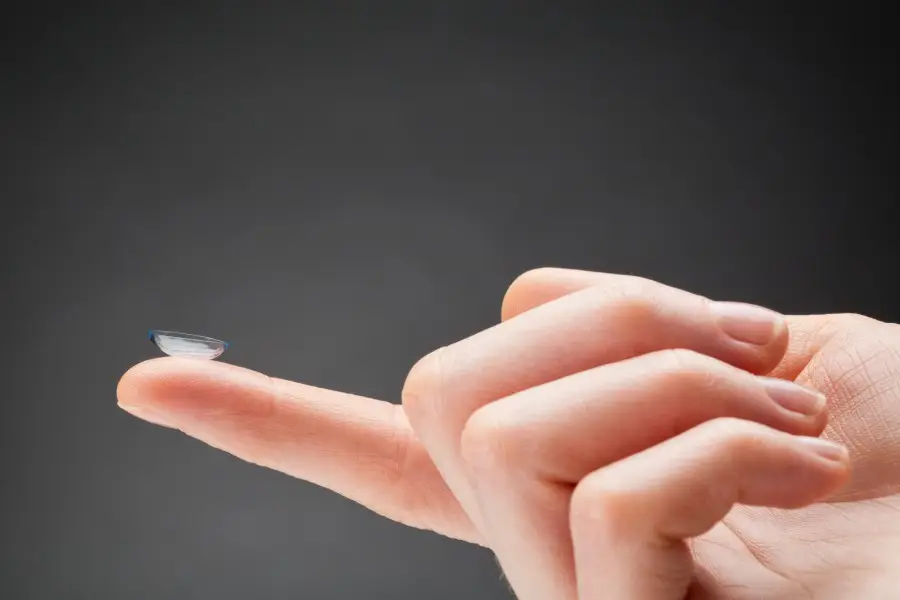
Rigid contact lenses worn only at night that gently reshape the cornea while the child sleeps. When they are removed in the morning, the child sees well all day without glasses or contact lenses, and the stimulus responsible for myopia progression is reduced. It is one of the treatments with the strongest scientific support for progression control and one of our main areas of specialisation.
All about orthokeratology2. Myopia control spectacle lenses
Glasses with controlled peripheral defocus designs, created specifically to reduce the stimulus for eye growth. In selected cases, bifocal or progressive designs are also used.
3. Soft myopia control contact lenses
Contact lenses designed specifically for children and teenagers that correct vision and, at the same time, create therapeutic peripheral defocus.
4. Pharmacological treatment
Low-dose atropine, prescribed and monitored by a doctor, with solid scientific evidence for reducing myopia progression.
5. Combined treatment
Combining methods, for example Ortho-K with atropine, can offer greater control than each treatment on its own.
Monitoring and follow-up
Myopia control requires regular check-ups with technology that measures the axial length of the eye, so treatment can be adjusted as it progresses. At Biòptic we support families throughout their child's visual development, with scheduled check-ups and adjustments at every stage.
Our commitment to children's vision
Childhood myopia requires experience, technology and continuous follow-up. At Biòptic we work to ensure that every child receives the most suitable treatment at each stage of their growth, helping them see well today and protecting their vision for the future.
Frequently asked questions
From what age can myopia control begin?
As soon as it is detected and progression is observed. Ortho-K can be used from age 6, always after a specialist assessment.
Does myopia control remove the dioptres my child already has?
No. The aim is to slow the increase, not reverse the existing prescription. That's why starting early makes the difference.
How much time outdoors is recommended?
The available evidence suggests that spending time outdoors every day has a protective effect against the development of myopia. It is a complementary recommendation, not a treatment on its own.
Does limiting screen time help?
It helps, but it isn't enough on its own. What matters most is not just total time, but working distance and regular breaks.
Would you like to slow your child's myopia?
We carry out a specialist assessment with axial length measurement and explain which treatment suits best.
Book an appointment