
Orthokeratology (Ortho-K): see clearly all day without glasses
Night-time lenses that correct myopia while you sleep and slow its progression in children.
What is orthokeratology?
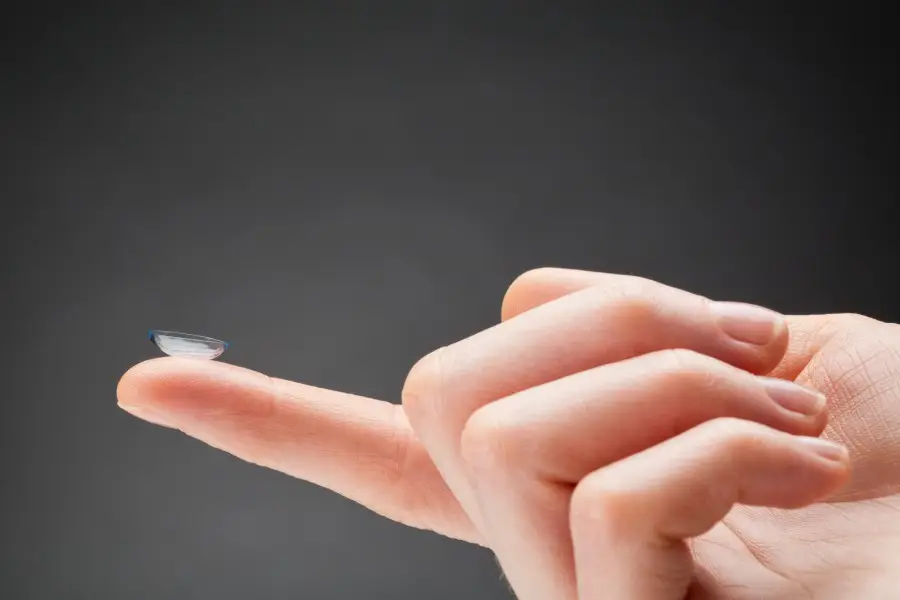
Orthokeratology, or Ortho-K, is an advanced, non-surgical optometric procedure that temporarily corrects refractive errors —mainly myopia and, in some cases, astigmatism— using rigid reverse-geometry contact lenses designed to be worn during sleep.
These lenses reshape the surface of the cornea in a controlled way overnight, changing its front curvature and redistributing the corneal epithelium. As a result, the refractive power of the eye changes and light focuses correctly on the retina throughout the day, without the need for glasses or conventional contact lenses.
The effect is reversible and lasts as long as the lenses continue to be worn every night.
How it works
Technical explanation of the mechanism
The mechanism is based on a rigid gas-permeable lens with a multi-curve design that creates a hydrodynamic pressure gradient between the back surface of the lens and the tear film. During overnight wear, this produces:
- Central flattening of the cornea, through controlled displacement of epithelial cells towards the mid-periphery.
- A relative increase in peripheral corneal curvature.
- A change in the aspheric corneal profile.
This change reduces the central dioptric power of the eye and compensates for the myopic refractive error. In addition, the corneal redistribution creates peripheral myopic defocus on the retina, which has been associated with a reduced stimulus for axial growth of the eye. This is especially relevant in children, since excessive axial growth is the main structural factor involved in myopia progression.
Ortho-K and myopia progression control
Several clinical studies have shown that Ortho-K not only compensates for the prescription during the day, but also helps slow the progression of myopia in children and teenagers. It is currently considered one of the most effective myopia control strategies, thanks to its ability to:
- Reduce axial elongation of the eye in growing patients.
- Modify the peripheral retinal defocus profile.
- Reduce the annual rate of dioptric progression.
Early intervention is key, especially in children with a family history of myopia or rapid progression, to minimise the risk of developing high myopia and its complications in adulthood.
Childhood myopia control →Who is it suitable for?
- Mild and moderate myopia.
- Low regular astigmatism.
- Children and teenagers whose myopia is progressing, from age 6 and always after a specialist assessment.
- People whose lifestyle is incompatible with daytime glasses or contact lenses: contact sports, water activities, dusty environments.
- Adults who want to stop wearing glasses without surgery.
Benefits for children
It acts on the stimulus that causes the eye to lengthen, not just on the prescription.
Your child sees perfectly without glasses while studying, playing or doing sport.
The lenses are put in and taken out at home, at night, under parental supervision.
It is not surgery and it is fully reversible.
Safety and reversibility
Carried out under professional supervision with a proper fitting and follow-up protocol, orthokeratology is a safe procedure. It has been used in Europe, the United States and other countries for more than two decades.
The contraindications are similar to those of any contact lens, and success depends on three factors: correct patient selection, expert professional fitting and compliance with hygiene guidelines and check-ups.
Because it is a reversible technique, if treatment is stopped the cornea gradually returns to its original shape and the eye goes back to its previous refractive state within days or weeks.
Our experience at Biòptic
We have been fitting orthokeratology treatments for many years, with a high level of specialisation and continuous clinical follow-up. Our approach includes:
- A detailed study of the cornea and the axial length of the eye.
- Personalised selection of the lens design.
- Training for parents and children in handling and hygiene.
- Regular check-ups to ensure effectiveness and safety.
Combined treatment
In some cases, Ortho-K can be combined with low-dose atropine, prescribed and monitored by a doctor, with changes in visual habits and with more time outdoors. Regular follow-up allows treatment to be adapted to each stage of growth.
Frequently asked questions
From what age can Ortho-K be used?
It can be used in children from age 6, always after a specialist assessment confirming that the case is suitable.
Does sleeping with the lenses hurt or feel uncomfortable?
At first you may feel something in your eye for the first few minutes, until you close your eyelids. Most patients get used to it within a few nights.
What happens if I stop wearing them?
The cornea gradually returns to its original shape and the prescription goes back to where it started within days or weeks. No permanent change remains.
Can Ortho-K be used with astigmatism?
Yes, for low regular astigmatism. For high or irregular astigmatism, other options such as scleral or hybrid lenses need to be considered.
You may be interested in
Would you like to know whether Ortho-K is right for you or your child?
Start with a full examination. We'll tell you clearly whether it's the best option.
Book an appointment