
Refractive surgery: pre-operative examination and clinical support
Refractive surgery corrects vision problems such as myopia, hyperopia and astigmatism, and reduces or eliminates dependence on glasses and contact lenses. Thanks to technological advances, procedures are increasingly precise, personalised and safe.
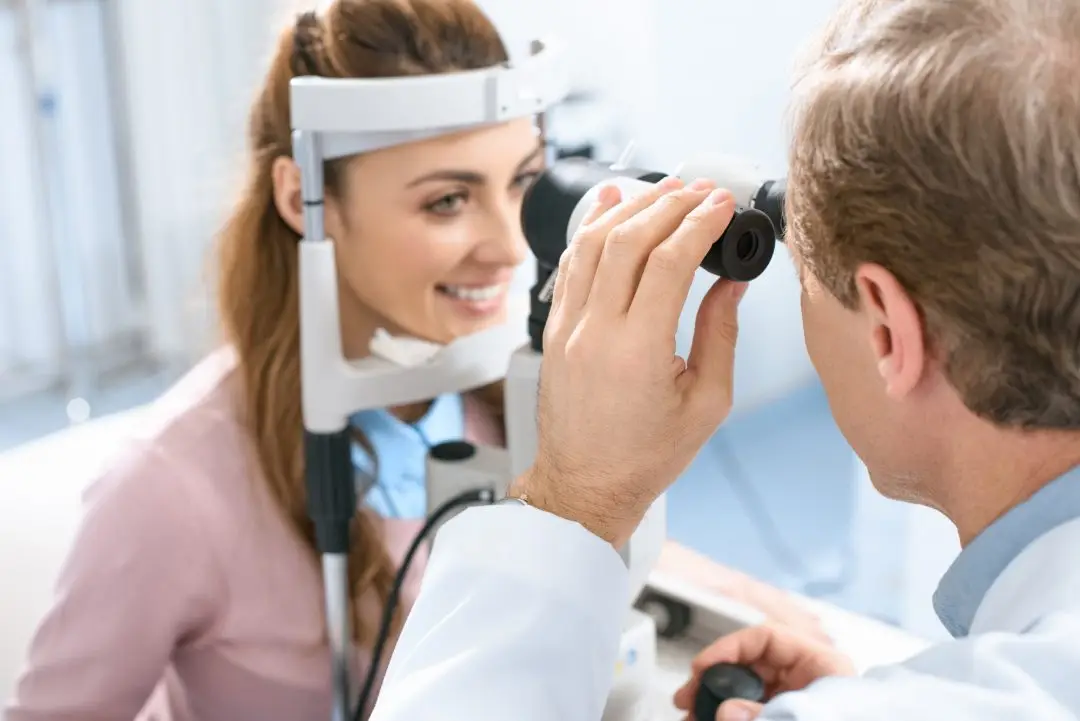
At Biòptic we have worked for more than 25 years in close collaboration with the Oftalmo+ team, led by Dr Joaquim Cabot, offering a joint approach that combines advanced optometric examination, state-of-the-art surgical technology and personalised follow-up.
The surgery is performed by the ophthalmology team. Our role is to be your trusted optometrist before, during and after the process.
Our role in the process
- A full visual examination beforehand, beyond the prescription: topography, pachymetry, aberrometry, pupil diameter and condition of the ocular surface.
- Assessment of whether you are a candidate and for which technique.
- Analysis of your real visual needs: reading, sport, driving, screen work.
- Guidance on choosing the intraocular lens where appropriate.
- Follow-up afterwards and optical correction if any residual prescription remains.
State-of-the-art laser technology
In suitable candidates, corneal laser correction reshapes the cornea with micrometric precision. Current platforms offer high accuracy in the ablation profile, greater refractive predictability, personalisation according to individual optical characteristics and fast visual recovery in most cases.
Combining a thorough visual examination with advanced technology helps maximise the final quality of vision, not just the visual acuity measured in the clinic.
ICL intraocular lenses: an alternative when laser is not indicated
Not all patients are candidates for laser surgery, whether because of high prescriptions, thin corneas or other anatomical characteristics. In these cases, a highly effective alternative is the implantation of phakic lenses such as the ICL (Implantable Collamer Lens). These lenses:
- Are implanted without altering the structure of the cornea.
- Are reversible.
- Can correct high prescriptions with excellent optical quality.
- Preserve the eye's natural accommodation.
Whether they are indicated depends on a detailed examination that assesses both refractive and anatomical parameters.
Cataract surgery and choice of intraocular lens
In cataract surgery, as well as restoring the transparency of the lens, it is now possible to correct refractive errors at the same time using premium intraocular lenses. At Biòptic we take part in the pre-operative visual examination, the assessment of the patient's visual needs and guidance on which intraocular lens is most suitable: monofocal, toric, multifocal or extended depth of focus (EDOF).
Choosing the right lens is essential to achieve a functional and satisfactory visual result in the long term.
Joint work focused on quality of vision
Coordination between optometry and ophthalmology helps optimise the surgical indication, reduce post-operative refractive surprises, improve perceived visual quality and support the patient throughout the process, from the initial assessment to follow-up.
Our goal is not just to “operate on the prescription”, but to make sure the final visual result truly meets each person's needs and expectations.
Would you prefer a non-surgical alternative?
Would you like to know whether you are a candidate for refractive surgery?
Start with a full examination. We'll tell you clearly which is the best path for your case.
Book an appointment